
How and Where to do Shopping?
Shopping is more than just buying things it’s a part of daily life that reflects our needs, choices, and lifestyle. From ancient barter systems to modern online stores and high-tech AR/VR experiences, shopping has evolved in countless ways. In this article, you will explore everything about shopping: how and where to shop, its history and purpose, different shopping methods, online vs. in-store comparisons, planning tips, the role of technology and social media, and even how shopping affects mood.
When did humans start shopping?
Humans, curious and social, started shopping thousands of years ago. The history of shopping, long and fascinating, began around 10,000 years ago when early, simple humans traded basic, useful goods like food, tools, and clothing in small, local markets. As societies grew, trading, organized markets appeared in towns and cities, where people could buy a variety of everyday, practical items and rare, luxurious goods.

The invention of money, small and convenient coins, made shopping easier and faster, allowing trade to expand across regions. Over centuries, shopping, modern and dynamic, evolved into marketplaces, department stores, and now online, digital platforms where people can find almost anything.
Just like choosing the right, safe sporting goods improves performance, studies show that using proper, healthy habits is important: a study from the American College of Sports Medicine showed that dehydration, mild but harmful, with only a 2% loss of body weight can reduce physical, energetic performance. Another study from the Department of Physiology of the Australian Institute of Sport found that low fluid intake in cyclists caused a relative, significant performance drop of 28.6%.
What is the purpose of shopping?
The purpose of shopping is to buy necessary, essential items like food, clothes, and tools, as well as fun, enjoyable products like sports goods that improve lifestyle, personal happiness, and comfort. One reason people shop is to save time, smartly plan, and meet their needs efficiently. The benefits of shopping include stress relief, personal, organized satisfaction, and support for local, small businesses. Shopping also encourages social, community interaction and allows people to discover new, useful products.
Just like using the right, safe sporting goods can improve performance, studies show that healthy, proper habits affect results: a study from the American College of Sports Medicine showed that dehydration, mild but harmful, with a loss of as little as 2% of body mass can reduce physical, energetic performance. Another study from the Department of Physiology of the Australian Institute of Sport found that low fluid intake in cyclists caused a relative, significant performance drop of 28.6%. This proves that making careful, smart choices whether in shopping or sports leads to better, consistent results and long-term benefits.
What are the facts about shopping?
Shopping is an interesting, emotional, and powerful experience. It’s more than just picking items; it’s about how our mind, emotions, and environment influence our decisions. Understanding the psychology of shopping helps brands connect better with buyers and helps customers make smarter choices.
FACT 1: The Emotional Connection Behind Shopping
Shopping often feels joyful, exciting, and relaxing. Many people shop not only to buy things but also to boost their mood.
FACT 2: How Colors Influence Buying Decisions
Colors play a big, emotional, and subconscious role in shopping. Brands use color psychology to attract attention and build trust. For example:
- Red creates excitement, energy, and urgency.
- Blue builds calmness, loyalty, and trust.
- Green gives balance, freshness, and peace.
FACT 3: The Power of Scarcity and Urgency
When something feels limited, our mind reacts quickly. You’ve probably seen phrases like “Only 2 left!” or “Sale ends today!” This tactic triggers fear of missing out (FOMO), a strong emotional response.
FACT 4: The Role of Social Proof
Humans are social, curious, and influenced beings. We tend to trust what others like or recommend. That’s why reviews, ratings, and influencer posts work so well. According to a report by Nielsen, 92% of consumers trust recommendations from friends and family more than any form of advertising.
FACT 5: The Psychology of Discounts
Everyone loves discounts, deals, and sales. But have you noticed that sometimes, a small discount feels more exciting than a big one? That’s because our brain loves instant rewards.
FACT 6: The Impact of Store Layout and Music
Shops are designed smartly, strategically, and psychologically. From lighting to music, everything is planned to make you stay longer and spend more.
FACT 7: The Online Shopping Mindset
Online shopping has its own unique, emotional, and mental triggers. Websites use smart design, colors, and recommendations to keep customers scrolling. For example, the “Add to Cart” button is often orange or yellow, colors known to create warmth and urgency. Personalized recommendations also make shoppers feel understood. A study by Deloitte showed that personalized shopping experiences can increase customer satisfaction by 20%.
What are the ways of shopping?
Shopping has changed a lot over time, offering many easy and creative ways to buy what we need. Following are the main ways of shopping and how each one affects the way we buy.
- In store shopping: where people can see and touch items before buying.
- Online shopping: which is fast, convenient, and done from home.
- Mobile shopping: Through apps makes buying even easier on the go.
- Window shopping: Just to browse or plan future purchases.
- Social media shopping: Lets users buy directly from posts or videos,
- Subscription shopping: Sends regular deliveries like food or beauty boxes.
- Secondhand shopping: It helps save money and protect the planet by reusing items.
- Personal shopping: It gives one-on-one help with style or gifts.
- Hybrid shopping: It mixes online and in-store experiences for comfort and control.
Shopping today is all about choice, convenience, and connection every method suits a different lifestyle and need.
Online vs In Store Shopping: Which Is Better
Deciding which is better depends on your needs, habits, and lifestyle.
| Online shopping | In-store shopping |
| Online shopping is better for people who want speed, convenience, and variety. It’s ideal for those who value time and comfort. | In-store shopping is better for people who enjoy personal experience, product testing, and instant satisfaction. |
A Deloitte report found that 73% of modern consumers use both online and offline channels before making a final purchase. This mix, known as hybrid or omnichannel shopping, gives the best of both worlds digital convenience and real-world confidence.
Where to do shopping online?
You can do online shopping through trusted websites, social media pages, and well-known retailers. Popular options include Amazon, eBay, Walmart, AliExpress, Target, and many brand websites. Many businesses also sell directly through Instagram, Facebook, and TikTok. These platforms make it easy to browse products, compare prices, and order from home.
Why Do People Prefer Shopping Malls These Days?
Shopping malls have become popular, modern, and fun places where people shop, eat, and relax. They are more than just shopping spots, they’re social, lively, and enjoyable spaces for families and friends. Let’s explore the main reasons behind this growing, exciting, and global trend.
Reason 1: Everything Under One Roof
People love malls because they offer everything in one place, from clothes and electronics to food and entertainment. According to Statista, over 75% of shoppers prefer malls since they can finish multiple purchases in one trip.
Reason 2: Comfortable Shopping Environment
Malls are also clean, safe, and comfortable, with air-conditioned and family-friendly spaces. A Deloitte survey showed that 68% of visitors value the comfort and cleanliness of malls.
Reason 3: Entertainment and Fun Activities
Another big reason is entertainment. Many malls have cinemas, play zones, and food courts, making them perfect for family outings. A CBRE report found that 60% of visitors go to malls mainly for fun, not just shopping. People also enjoy food options, sales offers, and brand variety.
Reason 4: Food and Dining Options
Food is another big, delicious, and powerful reason people love malls. Most malls have food courts with a wide variety of cuisines. You can eat, chat, and rest after shopping without leaving the building. According to Forbes, 52% of people say that food options are a major reason they spend more time in malls.
Reason 5: Safe and Family-Friendly Atmosphere
Security guards, CCTV cameras, and organized parking make people feel secure. Parents can bring kids without worry because malls offer child-friendly zones and family restrooms. A PwC report found that 69% of families prefer malls for their weekend outings because of safety and convenience.
Reason 6: Seasonal Sales and Offers
Malls often have big, attractive, and exciting sales during holidays or special events. These offers encourage people to shop more because they can find branded items at lower prices. According to NielsenIQ, 58% of consumers visit malls during sales seasons because they expect discounts and exclusive deals.
What should be done before shopping?
I have enlisted the 10 important tasks you should do before going to shopping, here is the list of tasks you should do before going to shopping:
Task 1: Make a Clear Shopping List
Before going out, it’s helpful to make a clear, simple, and organized shopping list. Write down everything you need instead of what you want. According to a National Retail Federation (NRF) report, 65% of shoppers who make a list before shopping spend less and buy only what they planned. A list also helps you remember important items and saves time when you reach the store.
Task 2: Set a Smart Budget
Money management is important, responsible, and practical. Setting a budget helps you control your expenses and avoid impulse buying. A CNBC study found that nearly 61% of Americans regret buying something on impulse.
TASK 3: Check What You Already Have
Before buying anything, look through your home, pantry, or wardrobe. Checking first helps you avoid buying duplicates and wasting money. For example, before grocery shopping, check your fridge and cabinets. Before buying clothes, look in your closet.
TASK 4: Compare Prices Online and Offline
Smart shoppers always compare prices before buying. Visit different, reliable, and trusted stores or check online websites to see where you can get the best deal. According to Statista, 88% of consumers research online before making a purchase, even if they plan to buy in-store.
TASK 5: Look for Sales, Discounts, and Coupons
Before shopping, always check for ongoing sales or discount offers. Many stores, both online and offline, offer special deals during weekends or festivals. You can also use digital coupons to get extra savings.
A RetailMeNot study showed that 74% of shoppers look for coupons before purchasing products. Using deals and offers makes shopping more affordable, enjoyable, and satisfying.
TASK 6: Choose the Right Time to Shop
Timing plays an important, useful, and strategic role in shopping. Try to shop early in the day to avoid crowds, long lines, or sold-out products. For online shopping, mid-week days often offer better deals than weekends.
A NielsenIQ report found that morning shoppers spend 20% less than late-day buyers because they feel more focused and calm.
TASK 7: Plan Where to Shop
Decide where you’ll go before leaving home. Whether it’s a local market, shopping mall, or online platform, choose a trusted, convenient, and safe place.
TASK 8: Dress Comfortably and Bring Essentials
If you’re going to a mall or market, wear comfortable clothes and shoes. Bring essentials like water, reusable shopping bags, and a list. Staying hydrated and relaxed keeps your mood positive. A study from the American College of Sports Medicine showed that dehydration resulting in a loss of as little as 2% of body mass can lead to lower physical performance. So, carry a bottle of water and take small breaks during long shopping trips.
TASK 9: Eat Something Before Shopping
Never shop on an empty stomach. When you’re hungry, you’re more likely to make impulsive, emotional, and unnecessary purchases, especially food items.
A Cornell University study found that hungry shoppers buy 18% more food than those who eat beforehand. Having a light meal helps you stay focused and make smarter choices.
TASK 10: Stay Mentally Prepared
Take deep breaths, stay relaxed, and remember your goals. Shopping should be a pleasant, balanced, and enjoyable activity, not a stressful task.
How to plan your shopping?
Planning your shopping is a smart, simple, and effective way to save time, money, and energy. Before you go, make a clear, organized, and easy list of what you need. Set a realistic budget and check what you already have at home to avoid buying duplicates. A National Retail Federation study found that 65% of shoppers who plan before shopping spend less and feel more satisfied with their purchases. You can also compare prices online, look for discounts, and choose the best, convenient, and trusted store. By planning wisely, you make your shopping smoother, stress-free, and more enjoyable.
What are the steps of shopping?
Shopping is a simple, organized, and step-by-step process that helps people buy what they need efficiently. Following picture shows steps of shopping:
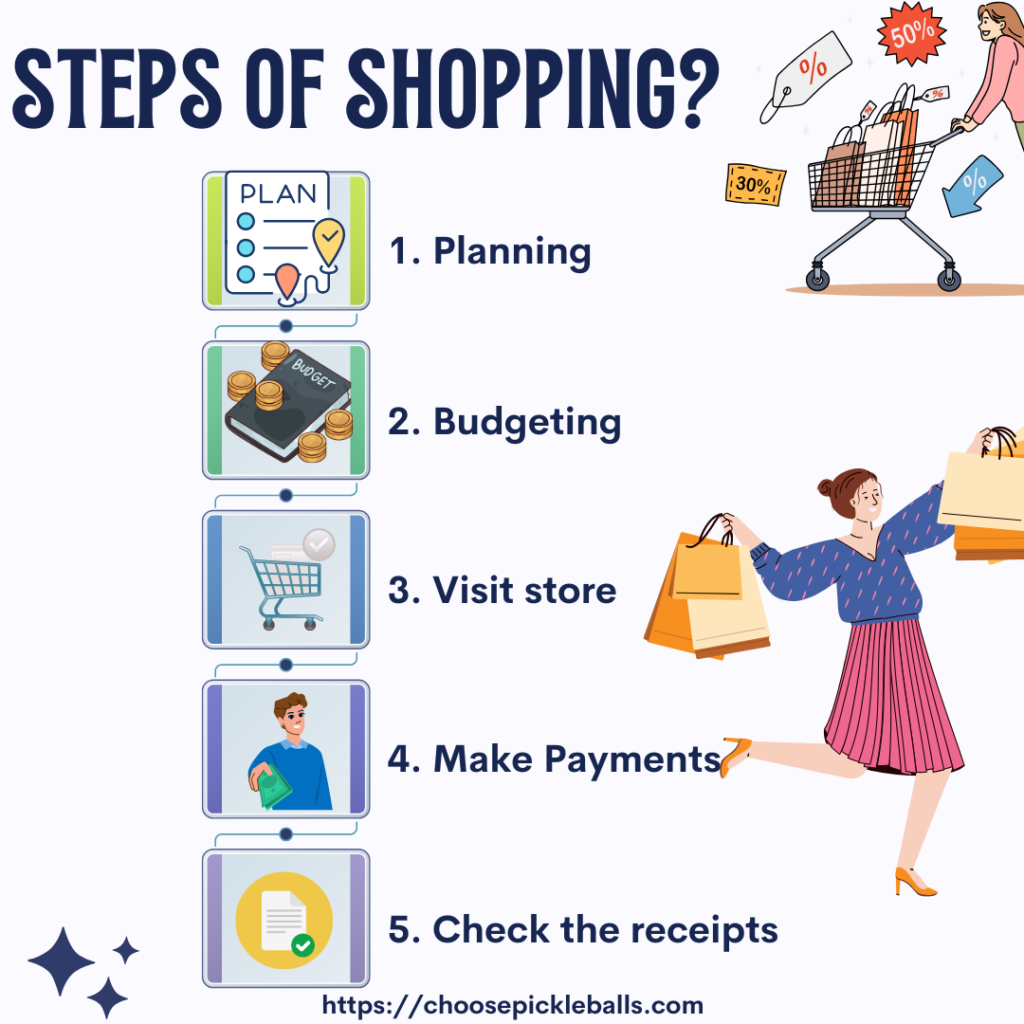
According to a National Retail Federation study, around 60% of shoppers who follow these steps feel more confident and save both time and money while shopping. This step-by-step, thoughtful, and careful approach makes shopping easier, safer, and more enjoyable.
Where can I find affordable shoes online?
Check out sites like Amazon and Zappos, they offer big selection of shoes at lower prices. For example, one review found shoes priced between $6 and $80. Explore discount-friendly outlets and clearance sections one website noted you can find shoes “up to 75% off” when shopping smartly. For global deals or shipping to other countries, older-season models and outlet stores often have good bargains. Consumer behavior, careful and changing, in the footwear market is influenced by comfort, style, and price. Shoppers, trend-conscious and selective, often choose shoes that are durable, attractive, and fit well. A survey from Statista revealed that 62% of consumers prefer buying footwear online because it is convenient, fast, and offers more variety.
How to buy shoes correctly?
First, always measure your feet before shopping, because sizes can vary between brands. According to a study from the American Orthopaedic Foot & Ankle Society, poorly fitting shoes can lead to foot pain and long-term problems in 60% of adults. Next, choose the right type of shoe for your activity, running, casual, or formal. Each type needs specific support, cushioning, and fit. For example, running shoes require flexible, breathable, and shock-absorbing materials. Always try shoes later in the day because feet swell slightly after walking, which ensures a more accurate, realistic fit.
Check for proper toe space, snug heel fit, and good arch support. Walk around in the shoes for a few minutes to test comfort, balance, and flexibility. If buying online, read reviews, look at size charts, and check the store’s return policy, one survey found that 52% of online shoe buyers returned shoes due to size or comfort issues. Finally, consider the material and quality, leather, synthetic, or mesh. Durable, lightweight, and breathable shoes last longer and keep your feet healthy. By following these careful, practical, and simple steps, you can buy shoes that feel good, look stylish, and support your feet properly.
How Shopping Centre’s Benefit and Contribute to Community
Shopping centres benefit communities by supporting local economies, creating social spaces, and encouraging sustainable practices. They are convenient, engaging, and essential centres that enrich community life while offering entertainment, services, and connections.
Shopping centres play an important, positive, and influential role in local communities. They are more than just places to buy goods they act as social, lively, and economic hubs where people gather, connect, and enjoy leisure time. By offering a variety of shops, restaurants, and entertainment, shopping centres create convenience, comfort, and enjoyment for residents.
Economically, shopping centres support local businesses and generate jobs. According to a report from the International Council of Shopping Centers, malls and retail centres employ over 1 in 10 workers in many countries, showing their strong, direct, and vital contribution to the economy. Small shops inside malls also benefit from increased foot traffic, which boosts sales and supports entrepreneurship.
Shopping centres also contribute socially by providing safe, clean, and family-friendly spaces. Many host events, workshops, and festivals that bring communities together. For example, a CBRE study found that malls that organize community activities experience up to 35% higher visitor engagement, showing their positive, interactive, and inclusive role.
Environmentally, modern shopping centres are becoming more sustainable, with energy-efficient lighting, waste recycling programs, and green spaces. These eco-friendly, thoughtful, and conscious efforts help improve local surroundings and promote environmental awareness among visitors.
What is AR and VR Shopping?
AR (Augmented Reality) and VR (Virtual Reality) shopping are modern, innovative, and immersive ways for people to explore products. AR shopping makes buying more confident, personal, and enjoyable because customers can try items virtually without touching them physically. For example, The IKEA Place app lets you use your phone’s camera to virtually place furniture in your home. You see how a sofa, table or lamp will look in your actual space before buying.
According to a report from Statista, around 40% of online shoppers have used AR tools to preview products, showing its growing, effective, and popular use in e-commerce. Brands use AR to reduce returns, improve satisfaction, and make online shopping faster, smarter, and easier. For example, furniture companies allow customers to place virtual sofas in their rooms, while fashion brands let buyers see how outfits fit using AR apps.

In VR shopping, customers wear VR headsets to enter a simulated, realistic, and 3D store environment. According to a report from Statista, the global virtual reality market for retail is expected to reach $1.6 billion by 2025, showing its growing, innovative, and exciting impact on shopping habits. VR shopping helps brands offer personalized, convenient, and memorable experiences while reducing the need for physical space and inventory. For example, luxury brands and tech stores use VR to allow customers to try products in a realistic, virtual, and safe environment before purchasing.

IKEA offers a VR shopping experience where customers can explore and design kitchen or living-room layouts using a VR headset. Overall, AR and VR shopping transform traditional, ordinary, and digital shopping experiences into interactive, exciting, and convenient journeys. They combine technology, creativity, and a customer-focused approach to help people shop smarter, faster, and more confidently.
How has technology changed the way we shop?
Online stores, mobile apps, and digital payment systems have made shopping faster, easier, and more convenient. People no longer need to visit physical stores to buy products; they can explore, compare, and purchase items from the comfort of their homes.
Digital tools like augmented reality (AR) and virtual reality (VR) have made shopping more interactive, engaging, and visual. For example, AR apps allow customers to try on clothes, shoes, or makeup virtually, while VR stores create immersive, realistic, and interactive shopping environments. According to a Statista report, e-commerce sales accounted for over 20% of global retail sales in 2022, showing the strong, growing, and transformative impact of technology on shopping behavior.
Technology has also improved efficiency, safety, and convenience in stores. Contactless payments, self-checkout kiosks, and inventory management apps save time, reduce errors, and enhance customer satisfaction. Mobile notifications, loyalty programs, and personalized recommendations provide targeted, smart, and helpful suggestions to shoppers, increasing engagement and sales.
What is Social Media Impact on Today’s Shopping Trend
Social media has dramatically, quickly, and strongly changed the way people shop. Platforms like Instagram, Facebook, TikTok, and Pinterest allow users to discover, share, and explore products instantly. Shoppers now follow brands, influencers, and friends to get recommendations, reviews, and inspiration, making shopping more social, visual, and interactive. According to a Statista report, 54% of social media users say they have purchased products after seeing them on social platforms, showing the powerful, growing, and direct influence of social media on buying behavior.
The Role of Influencers and User-Generated Content
Influencers and user-generated content play a major, visible, and persuasive role in guiding consumer choices. Short videos, live streams, and posts allow brands to demonstrate products in real-life, practical, and appealing ways, increasing trust and engagement. Shoppers are more likely to buy products they see endorsed by someone they follow, making social commerce an essential, modern, and profitable part of marketing strategies.
Personalized and Targeted Advertising on Social Media
Social media also enables targeted, personalized, and data-driven advertising. Platforms collect user data to show relevant ads based on interests, location, and behavior. This precise, effective, and convenient advertising increases conversion rates and helps brands reach potential buyers faster than traditional methods.
What is the best time of day to shop?
The best time of day to shop is 8:00 a.m. and 8:00 p.m. The best, quiet, and convenient time of day to shop is usually in the morning or early afternoon. According to a survey by RetailMeNot, 61% of shoppers prefer to visit stores in the morning because it is peaceful, faster, and more comfortable.
For online shopping, the best, strategic, and productive times are often late at night or early morning. Data from Adobe Analytics shows that e-commerce traffic peaks around 8 PM, as people browse stores after work, relax, and make purchases from home. Overall, choosing the right, calm, and suitable time of day can improve both in-store and online shopping experiences.
Does shopping improve mood?
Yes, shopping can positively, noticeably, and temporarily improve mood for many people. If woman is angry, then offer her shopping, and she will be fine. Going to stores, malls, or even shopping online provides a sense of enjoyment, excitement, and reward. Engaging in retail therapy allows individuals to explore new products, try trendy items, and feel a sense of accomplishment when finding what they want. The following collection of picture shows the good moods of the ladies while shopping, check the excitement level of women:

According to a study published in the Journal of Consumer Research, 76% of participants reported feeling happier after shopping, especially when purchasing desired or meaningful items, showing the clear, measurable, and uplifting effect of shopping on emotional well-being.
FAQ’s
Can shopping patterns reveal personality traits?
Yes, impulsive buyers, bargain hunters, and brand loyalists often display distinct personality indicators.
How does music in stores influence shopping behavior?
Fast music increases pace; slow music encourages browsing and higher spending.
Can shopping improve cognitive skills?
Strategic shopping (comparing prices, planning) can enhance decision-making and budgeting skills.
Do people buy differently when shopping alone vs with friends?
Social shopping often leads to higher spending due to peer influence.
How does scent affect in-store shopping?
Pleasant smells can increase dwell time and sales; some stores use this subtly.