

What is Footwear Industry? Comprehensive And detailed explanation [2025]
The footwear industry, or the world of shoe making, is an exciting and ever-growing part of the global fashion and apparel market. It includes all kinds of shoes, including sports and casual sneakers, formal shoes, work footwear, and luxury designs, each created to serve different needs and lifestyles. Beyond just making shoes, this industry involves design, science, technology, and culture, with innovations like 3D printing and digital customization shaping the way shoes are made and worn. In this guide, we will take a closer look at what the footwear industry is, the different types and segments of shoes, how they are made, the trends driving the market, and why footwear plays such an important role in our daily lives.
What type of industry is footwear?
The footwear is the garment of the feet; the shoes we wear on the feet are called the footwear. The footwear industry, also known as the shoe manufacturing sector, is a dynamic, creative, and competitive part of the fashion and apparel market. It includes all companies that design, produce, and sell shoes, sandals, boots, and other types of footwear for men, women, and children. This industry is not only about fashionable, stylish, or trendy designs. It also connects with health, comfort, sports, and technology. In simple terms, footwear is a mix of manufacturing, retail, and fashion industries. It creates products people wear every day for protection, performance, and personal style.
What is footwear industry examples?
The footwear industry includes all businesses that design, manufacture, and sell shoes, covering a wide range of styles and purposes. For example, athletic footwear, such as running, pickleball shoes, basketball, soccer, and tennis shoes, focuses on performance, comfort, and safety, with top brands like Nike, Adidas, Puma, and New Balance leading the market. Meanwhile, casual footwear is designed for everyday wear, whether for school, work, or travel, and popular options include Vans, Converse, Skechers, and Crocs.
In contrast, formal footwear emphasizes polished, elegant designs suitable for business meetings or special occasions, with Clarks, Allen Edmonds, and Bata being notable examples. For industrial and work environments, footwear prioritizes protection and durability, as seen in steel-toe and slip-resistant boots from Caterpillar (CAT), Timberland PRO, and Red Wing Shoes. On the other end of the spectrum, luxury footwear showcases high-end, handcrafted designs that combine fashion and prestige, with Gucci, Christian Louboutin, Jimmy Choo, and Louis Vuitton as leading brands. Finally, sustainable footwear is a rapidly growing segment that focuses on eco-friendly materials and ethical production practices, with Allbirds and Rothy’s pioneering this approach.
Types of footwear
The footwear industry can be divided into following list of shoe styles:
- Athletic Footwear: For sports (like pickleball shoes), fitness, and outdoor activities.
- Casual Footwear: For daily, comfortable, and stylish use.
- Formal Footwear: For business, meetings, and special occasions.
- Industrial Footwear: For work safety and protection (like steel-toe boots).
- Luxury Footwear: Designer shoes made from premium materials for high-end customers.
Is the footwear industry a type of sports industry?
Not exactly. The footwear industry is not a type of sports industry, but it overlaps with it in certain segments. Here’s the distinction:
- The sports industry is broad and includes all businesses and activities related to sports, such as equipment, apparel, events, athletes, media, and facilities.
- The athletic footwear segment of the footwear industry specifically focuses on shoes designed for sports and physical activity.
So, athletic footwear is a part of both the footwear industry and the sports industry, but the footwear industry itself also includes casual, formal, industrial, and luxury shoes, which are outside the sports industry.
What is the difference between shoes and footwear?
Footwear is a broad term that includes all types of protective and decorative coverings for the feet. This includes shoes, sandals, boots, slippers, and even specialized items like athletic cleats or work boots. Shoes, on the other hand, are a specific type of footwear that typically cover the foot completely or partially, often with a sole and upper, and are designed for walking, running, or fashion purposes.
In short, all shoes are footwear, but not all footwear are shoes. Sandals, flip-flops, and some boots fall under footwear but are not always considered shoes in the strict sense.
How big is the shoe industry?
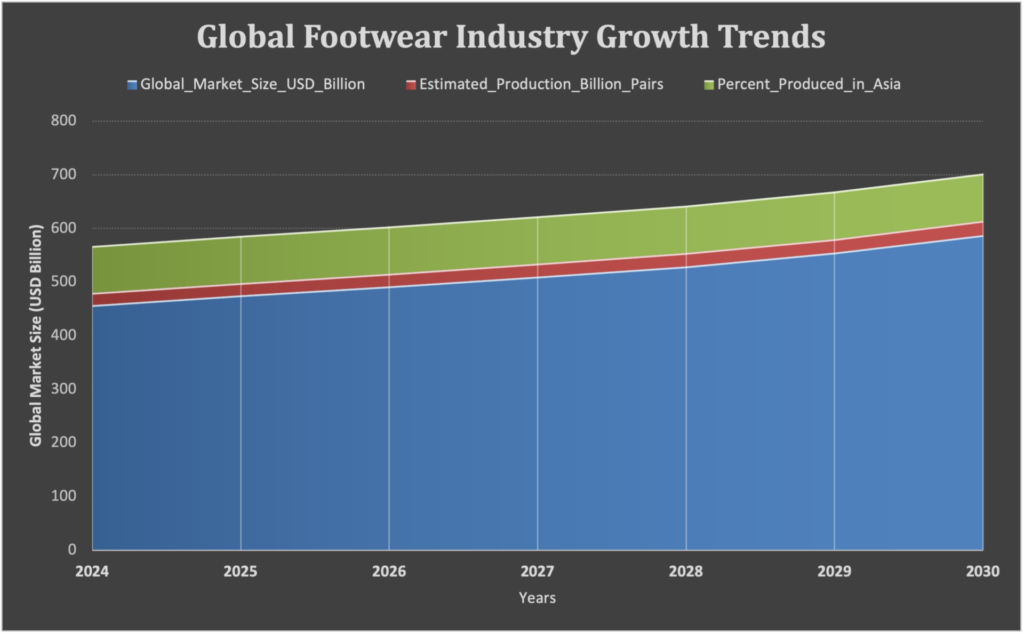
The shoe industry, also called the footwear market, is a huge, growing, and global business. It includes all types of shoes like sports, casual, formal, and luxury footwear made and sold worldwide. According to Grand View Research (2024), the global footwear market was worth around USD 457 billion and is expected to grow to about USD 588 billion by 2030, showing strong demand and expansion. The industry also produces over 23 billion pairs of shoes every year, with most coming from Asia, especially China. This shows how massive, dynamic, and important the footwear sector is in both fashion and manufacturing.
The following graph illustrates the growth and production trends of the global footwear industry from 2024 to 2030. The X-axis represents the years, while the Y-axis shows both the global market size in USD billions and the estimated annual production in billions of pairs.
What are the Science and Sociology of Footwear?
The science and sociology of footwear are fascinating, complex, and connected areas that explain how shoes affect both the human body and society. From a scientific view, footwear supports balance, protects feet, and improves movement. Sports shoes, for example, are designed using advanced, biomechanical, and ergonomic research to reduce injury and increase comfort.
A study from the American College of Sports Medicine showed that dehydration resulting in a loss of as little as 2% of body mass can be associated with a decline in physical performance. Another study conducted by researchers from the Department of Physiology of the Australian Institute of Sport found that low fluid intake in cyclers resulted in a relative performance impairment of 28.6%.
Just like hydration impacts performance, well-designed footwear helps athletes perform better and stay safe. From a sociological view, shoes represent culture, status, and identity what people wear on their feet often shows their lifestyle, profession, and fashion choices. Thus, footwear combines science, culture, and self-expression in everyday life.
How do footwear industries make footwear?
The footwear industry, also known as the shoe manufacturing sector, uses a careful, creative, and technical process to make shoes. It starts with design, where experts sketch stylish and comfortable ideas using computer software. Then comes material selection, choosing strong and flexible materials like leather, rubber, or synthetic fabrics. After that, skilled workers and machines cut and shape parts such as the sole, upper, and insole. These pieces are then stitched, molded, and assembled together to create the final shoe. Each shoe goes through testing, polishing, and packaging before reaching stores.
A study from the American College of Sports Medicine showed that dehydration resulting in a loss of as little as 2% of body mass can be associated with a decline in physical performance. Another study conducted by researchers from the Department of Physiology of the Australian Institute of Sport found that low fluid intake in cyclers resulted in a relative performance impairment of 28.6%. Just as hydration improves athletic performance, precise, detailed, and scientific shoe production ensures comfort, durability, and quality for users.
What are the segments of the footwear industry?
The main segments include athletic footwear, made for sports and physical activities; casual footwear, designed for daily comfort and style; formal footwear, used for offices and events; industrial footwear, created for safety and protection at work; and luxury footwear, focused on design, fashion, and exclusivity. Each category serves a specific audience and function.
A study from the American College of Sports Medicine showed that dehydration resulting in a loss of as little as 2% of body mass can be associated with a decline in physical performance. Another study conducted by researchers from the Department of Physiology of the Australian Institute of Sport found that low fluid intake in cyclers resulted in a relative performance impairment of 28.6%. In the same way hydration supports better body performance, each specialized, functional, and unique footwear segment enhances comfort, purpose, and lifestyle for users.
Why They Use Of Polyurethane In The Footwear Industry?
The footwear industry, also called the shoe manufacturing sector, uses polyurethane (PU) because it is a lightweight, durable, and flexible material that improves comfort and performance. Polyurethane is often used in shoe soles because it provides excellent cushioning, shock absorption, and strength, helping shoes last longer while keeping them comfortable for daily wear. It is also water-resistant, easy to mold, and cost-effective, making it ideal for both sports and casual shoes.
A study from the American College of Sports Medicine showed that dehydration resulting in a loss of as little as 2% of body mass can be associated with a decline in physical performance. Another study conducted by researchers from the Department of Physiology of the Australian Institute of Sport found that low fluid intake in cyclers resulted in a relative performance impairment of 28.6%. Just like hydration supports better body performance, using high-quality polyurethane helps shoes stay comfortable, supportive, and long-lasting, improving how people move and feel every day.
What is the composition of footwear?
The main components of a shoe/footwear include adhesives, buckles, the counter, which provides structure and supports the ankle at the back of the shoe, eyelets, heels, hooks, insoles, outsoles, laces, shanks, soles, tacks, tongues, which cover the top of the foot beneath the laces, treads, and welts. The Below image shows the composition of footwear, or you can say components of shoes:

Each shoe has three main sections: the upper, insole, and outsole. The upper gives shape and style using materials like leather or fabric. The insole offers soft, supportive, and cushioned comfort, while the midsole, made from polyurethane (PU) or EVA, absorbs shock.
The outsole, made of rubber, adds grip and durability. A study from the American College of Sports Medicine showed that dehydration resulting in a loss of as little as 2% of body mass can be associated with a decline in physical performance. Another study from the Australian Institute of Sport found that low fluid intake in cyclers caused a 28.6% performance drop. Similarly, high-quality materials in shoes improve comfort, strength, and long-lasting performance.
Who owns size of footwear?
The footwear market, also called the shoe industry, is large, competitive, and global, and is dominated by several major companies. Brands like Nike, Adidas, Puma, Skechers, and New Balance hold the largest, influential, and valuable market shares worldwide. According to Statista (2024), Nike alone controls about 27% of the global athletic footwear market, making it the biggest player. Adidas follows with around 15% market share, while other brands share the rest.
A study from the American College of Sports Medicine showed that dehydration resulting in a loss of as little as 2% of body mass can be associated with a decline in physical performance. Another study from the Australian Institute of Sport found that low fluid intake in cyclers caused a 28.6% performance drop. Just like hydration boosts physical ability, strong, leading, and recognized brands dominate the size and influence of the global footwear industry.
What is the art behind footwear designs?
The art behind footwear designs is creative, detailed, and expressive, combining style, function, and culture. Designers carefully choose colors, materials, and shapes to make shoes comfortable, stylish, and unique. They consider trends, ergonomics, and the purpose of the footwear, whether it’s for sports, fashion, or work.
A study from the American College of Sports Medicine showed that dehydration resulting in a loss of as little as 2% of body mass can be associated with a decline in physical performance. Another study from the Australian Institute of Sport found that low fluid intake in cyclers caused a 28.6% performance drop. Just like proper hydration improves human performance, thoughtful, innovative, and artistic shoe design enhances comfort, usability, and personal expression.
Why is footwear design important?
Footwear design, thoughtful and practical, is very important for comfort, safety, and health. Proper shoes, well-made and supportive, can protect feet from injuries, painful blisters, and long-term problems like back pain. Athletic, durable shoes also improve performance, efficient and stable, during sports or daily activities. A study from the American Podiatric Medical Association showed that wearing poorly designed shoes increases the risk of foot pain by 35% compared to well-fitted footwear. Good design, creative and functional, balances style with practicality, helping people move easily, safely, and confidently every day.
What are Consumer Behavior and Preferences about footwear industry?
Consumer behavior, careful and changing, in the footwear market is influenced by comfort, style, and price. Shoppers, trend-conscious and selective, often choose shoes that are durable, attractive, and fit well. A survey from Statista revealed that 62% of consumers prefer buying footwear online because it is convenient, fast, and offers more variety.
Brand loyalty, strong and important, also plays a role, with many buyers returning to brands that match their lifestyle, ethical values, and personal taste. Understanding these preferences, strategic and insightful, helps companies design, market, and sell shoes that satisfy modern, practical, and fashionable customers.
What are the benefits of shoes and why they are so important?
Comfortable and protective shoes, are very important for daily life, health, and safety. Proper footwear, supportive and well-designed, helps prevent foot injuries, painful blisters, and long-term joint problems. Athletic shoes, strong and durable, can also improve performance, efficient and stable, during running, walking, or sports. A study from the American Podiatric Medical Association found that 35% of people who wore poorly fitted shoes experienced chronic foot pain, while well-fitted shoes greatly reduced discomfort. Good shoes, stylish and practical, support posture, reduce fatigue, and allow people to move safely, confidently, and comfortably every day.
What are the features of healthy footwear?
Healthy footwear, supportive and comfortable, has several key features that protect feet and improve movement. Shoes, well-cushioned and durable, should provide proper arch support, flexible soles, and breathable materials to keep feet dry, cool, and pain-free. A study from the American Podiatric Medical Association found that shoes with good arch support reduced foot pain in 40% of adults with chronic discomfort. Properly designed footwear, lightweight and stable, also helps maintain posture, prevent injuries, and make walking or running safer, easier, and more enjoyable.
What is the rise of the digital in the footwear industry
The digital revolution, fast-moving and powerful, is changing the footwear industry in many ways. Online shopping, convenient and widespread, allows consumers to explore styles, compare prices, and read reviews before buying. A report from Statista revealed that in 2023, 58% of footwear sales in the U.S. happened online, showing a rapid, significant shift from physical stores. Digital tools, interactive and innovative, like 3D foot scanning and virtual try-ons, help customers find better-fitting, comfortable shoes while brands track trends, manage inventory, and create personalized experiences.
The Future of the Footwear Industry?
The future of footwear, innovative and dynamic, is focused on sustainability, technology, and personalization. Eco-friendly shoes, stylish and responsible, are becoming more popular as consumers care about the environment and ethical practices. A report from Grand View Research found that the sustainable footwear market is expected to grow by 9.1% annually from 2024 to 2030. Smart shoes, connected and advanced, with features like fitness tracking and pressure sensors, will also change how people choose and use footwear. The industry, creative and fast-evolving, is moving toward a future where comfort, style, and technology work together for healthier, smarter, and more conscious choices.
Is the footwear industry growing?
Yes, the footwear industry is growing, healthy and steady. As per the footwear market analysis the global market was valued at about US$ 457.09 billion in 2024 and is expected to reach US$ 588.22 billion by 2030, growing at a compound annual growth rate (CAGR) of around 4.3%.
What is the footwear industry worth
The global footwear market, large and expanding, was estimated at about US $ 457.09 billion in 2024 and is projected to reach around US $ 588.22 billion by 2030, growing at roughly 4.3% annually. The image below shows the global footwear market size till 2030.

What kinds of footwear do people like to wear?
People wear many types of shoes, popular and varied, depending on comfort, occasion, and style. Surveys show that in the U.S., about 65% of people frequently wear sneakers, while sandals/flip‑flops follow at 15%. Among people who buy new shoes for the upcoming season, 73% plan to buy running shoes, and 71% say they wear sneakers or athletic shoes casually every day. Loafers, boots, and formal shoes still matter for work or special events, but everyday choices lean toward shoes that are comfy, casual, and easy to move in.
What is the trend in the footwear industry?
The footwear market, shifting and dynamic, is seeing big changes in 2024 and beyond. More shoes are being made from eco‑friendly materials like recycled plastics and natural fibres. Consumers, style‑conscious and eco‑aware, are also asking for more custom‑fitted and personalised shoes with unique colours, materials and even 3D‑printed parts. At the same time, more people buy shoes online, infact, about 40% of sales now happen digitally. These trends show that comfort, technology and sustainability are becoming key in the footwear world.
What are the factors affecting the footwear industry?
Several key factors affect the footwear industry, important and powerful. First, economic changes like higher income, more spending, and city growth increase demand for comfortable, stylish shoes, but rising material costs and supply problems can slow growth. Second, social trends like health awareness, athleisure, and comfort-focused fashion make people prefer supportive, versatile shoes. More consumers also care about eco-friendly and ethical products. Third, technology like automation, 3D printing, smart shoes, and online shopping is changing how shoes are made and sold. Fourth, environmental rules and sustainability push brands to use safe materials and fair labor practices. Finally, competition, counterfeits, branding, and trade rules affect costs and market success.
How 3D Printing Is Revolutionizing The Footwear Industry?
3D printing, new and exciting, is changing how shoes are made and designed. The global market for 3D‑printed shoes was about US$ 1.64 billion in 2023 and could grow to US$ 5.38 billion by 2030 with a CAGR of 18.6%. This technology lets brands make custom shoes, including midsoles and uppers, that fit each foot perfectly. It also uses fewer parts, reduces waste, and speeds up production. Smart brands are using 3D printing to make shoes that feel better, fit better, and are made faster.
What is the footwear industry?
The footwear industry makes and sells shoes for men, women, and kids. It includes designing, producing, and selling all kinds of shoes from sneakers and sandals to boots and formal shoes.
What types of shoes are there?
Main types include Athletic for sports and fitness, Casual for everyday wear, Formal for work or events, Work/Industrial for safety and tough jobs, Luxury high-end designer shoes, and Sustainable eco-friendly shoes.
How big is the footwear market?
The global shoe market was about $457 billion in 2024 and is expected to reach $588 billion by 2030, growing steadily each year.
Why is shoe design important?
Good design keeps your feet comfortable, prevents injuries, and supports better posture and performance. Poor shoes can cause pain and long-term problems.
What materials are used in shoes?
Shoes are made from leather, fabric, rubber, and synthetic materials. Polyurethane (PU) is common in soles because it’s light, flexible, and comfortable.
How is 3D printing changing shoes?
3D printing helps make custom-fit shoes, reduces waste, and speeds up production. The 3D-printed shoe market is growing fast.
Who are the top shoe brands?
Big brands include Nike, Adidas, Puma, Skechers, and New Balance. They lead because of quality, innovation, and popularity.
What affects the shoe industry?
Factors include the economy, fashion trends, technology, sustainability, rules, and competition. Prices, materials, and online shopping also play a role.
What are the latest shoe trends?
People want eco-friendly materials, custom-fit shoes, smart shoes, and easy online shopping. Comfort and style are top priorities.
Why are shoes important for health?
Shoes protect your feet, improve balance, prevent pain, and support your posture. Good shoes help you move safely and comfortably every day.
What are some examples of athletic footwear?
Athletic footwear includes shoes made for running, basketball, soccer, tennis, and other sports. They are designed for comfort, speed, and safety. Popular brands include Nike (Air Jordan, Air Max), Adidas (Ultraboost, Yeezy), Puma, and New Balance.
What is casual footwear and which brands are popular?
Casual footwear consists of shoes worn daily for school, work, or travel. These shoes are comfortable, stylish, and versatile. Examples of casual footwear brands are Vans, Converse, Skechers, and Crocs.
What is formal footwear and which brands are well-known?
Formal footwear includes polished, elegant shoes worn for business meetings, school uniforms, or special occasions. Notable brands include Clarks, Allen Edmonds, and Bata. Formal shoes typically use leather or synthetic materials, focusing on both appearance and comfort.
What is industrial or work footwear?
Industrial and work footwear is designed for safety and durability in factories, construction sites, and outdoor environments. These shoes often have thick soles, slip-resistant materials, and reinforced toe caps. Leading brands include Caterpillar (CAT), Timberland PRO, and Red Wing Shoes.
What are examples of luxury footwear brands?
Luxury footwear is high-end and exclusive, often handmade and limited in number. It focuses on craftsmanship and prestige. Examples include Gucci, Christian Louboutin, Jimmy Choo, and Louis Vuitton.
What is sustainable footwear?
Sustainable footwear is part of the eco-friendly and ethical segment of the industry. It focuses on reducing waste, using recycled materials, and supporting fair labor practices. Popular sustainable footwear brands include Allbirds and Rothy’s.
How does the footwear industry cater to different consumer needs?
The footwear industry offers diverse categories such as athletic, casual, formal, industrial, luxury, and sustainable shoes, ensuring there are options for everyday comfort, sports performance, workplace safety, luxury fashion, and environmentally conscious choices.






2 Comments
Comments are closed.